
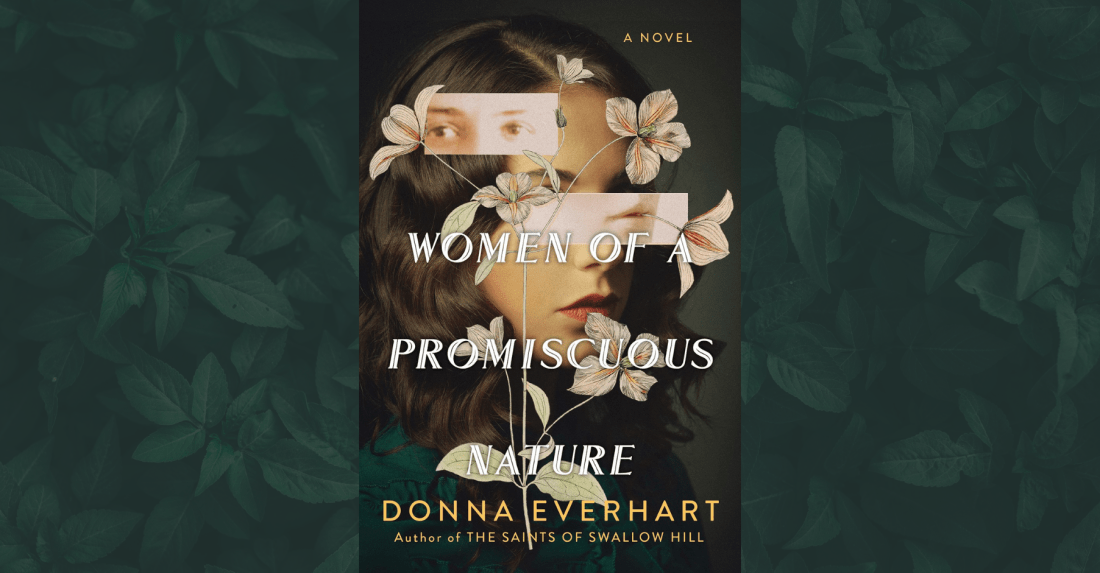
From the American Plan in 1918 to the Heritage Foundation’s Project 2026 in, well, 2026, women’s bodies and sexuality seem to be the perennial target of men in positions of authority. In Donna Everhart’s historical novel Women of a Promiscuous Nature, ordinary women in 1940s North Carolina resist their unjust incarceration at the State Industrial Farm Colony for Women.
The American Plan, I’ve learned, was a World War I-era public health program that aimed to prevent sexually transmitted diseases in male combat troops. Though ostensibly gender-neutral, it was used instead to arrest, imprison, and persecute women who were “reasonably suspected” of prostitution.
Unsurprisingly, women who weren’t married, women who lived or ate dinner alone, women who were suffering from intimate partner violence, and women minding their own business on their way to work might all have been “reasonably suspected” of promiscuity.
Everhart’s story builds a fictional narrative around this “herstory” from three perspectives.
Dorothy Baker (“Baker”) is the superintendent of the Kinston, North Carolina colony that serves as the backdrop here. Capable but emotionally and physically scarred from multiple past traumas, she’s a cog in the machine, the “Aunt Lydia” of Everhart’s novel.
Baker’s a tragic figure, a true believer in “reform” and in the system she works for. She has fully bought into her responsibility to provide “thoughtful educational and corrective direction” to wayward women. Her methods, however, are anything but thoughtful: they include solitary confinement, harmful medical procedures, forced sterilization, hard labor, and corporal punishment. Force, deprivation, and pain are her currency.
Stella, 15, and Ruth, 24, are detainees. Stella is deposited at the Colony by her parents after becoming pregnant from rape. The Colony gives her the structure and support that she lacked at home, and her loyalties to Baker and to her fellow inmates are tested as she tries to find her way over the course of the story.
Ruth is the novel’s moral center and an effective stand-in for the modern reader. A single waitress, she is on her way to work when she is essentially kidnapped by a local sheriff, forced to undergo a medical examination, purposefully misdiagnosed with syphilis, and incarcerated at the Colony.
Most of the action takes place at the Colony, which is clearly depicted. On the surface, it’s a retraining facility where women cook and clean, sew, do farming and field work, and learn how to budget and run a household. In reality, it’s a prison without accountability or due process.
Perhaps the element I found most disturbing about the women’s predicament is the fact that parole is at the apparent discretion of those financially incentivized to keep the women imprisoned. Getting out of the Colony and returning to normal life is “up to” each woman, whatever that means. It’s never clear what standard must be met, because there is no standard.
Overall, the book is a slow burn, exploring the relationships between the women at the Colony and examining their moral conundrums and choices. Baker wants professional recognition and funding from the “board” for new dormitories to expand her fiefdom. Stella wants to be loved and appreciated; she wants to matter. Ruth wants to return to her life, to escape the injustice she suffers, to get out. Women of a Promiscuous Nature is a delicate weaving together of these motivations and how they merge and diverge over several months.
And, beneath all this, is a forceful critique of patriarchy. I am always here for women, fictional and otherwise, who speak truth to power. When Stella notices a female nurse deferring to a male doctor, she sees that the nurse is no more in charge than she is. “Women give in,” she thinks, and what she means is women always give in. Even Baker chafes against the man in charge of the Colony, Dr. Woodall, and the male doctors, Drs. Graham and Greene, who are her colleagues.
The message was occasionally a bit on-the-nose, however, a bit over-explained. Ruth rightly muses one day, “Why are women the only ones locked away?” She goes on, though: “What she’s gathered is if a woman’s behavior is outside the boundaries of society’s beliefs or expectations, it often falls under the label of promiscuous, or suspect. Women pose a threat.” Perhaps that sentiment could have been left to the reader to surmise.
Despite this critique, I was invested in these complex characters and their journeys. I rooted for Ruth, for her agency and her humanity. And I was entertained by the give-and-take of two pairs of women, Baker and the self-serving housemother Ethel Maynard, and Stella and another young detainee, Frances Platt, who I thought was particularly well-drawn. The last third of the book was speedy and satisfying, with Ruth in her most morally precarious position yet and Baker’s authority at its most tenuous.
The relevance of this story to the modern era’s resurgence of misogyny and its chipping away of women’s civil rights and bodily autonomy, including and after the loss of Roe, is undeniable. The American Plan is historical, yes, but woman-blaming has a long shelf life. In my view, the more stories like these, the better; there is just too much at stake.
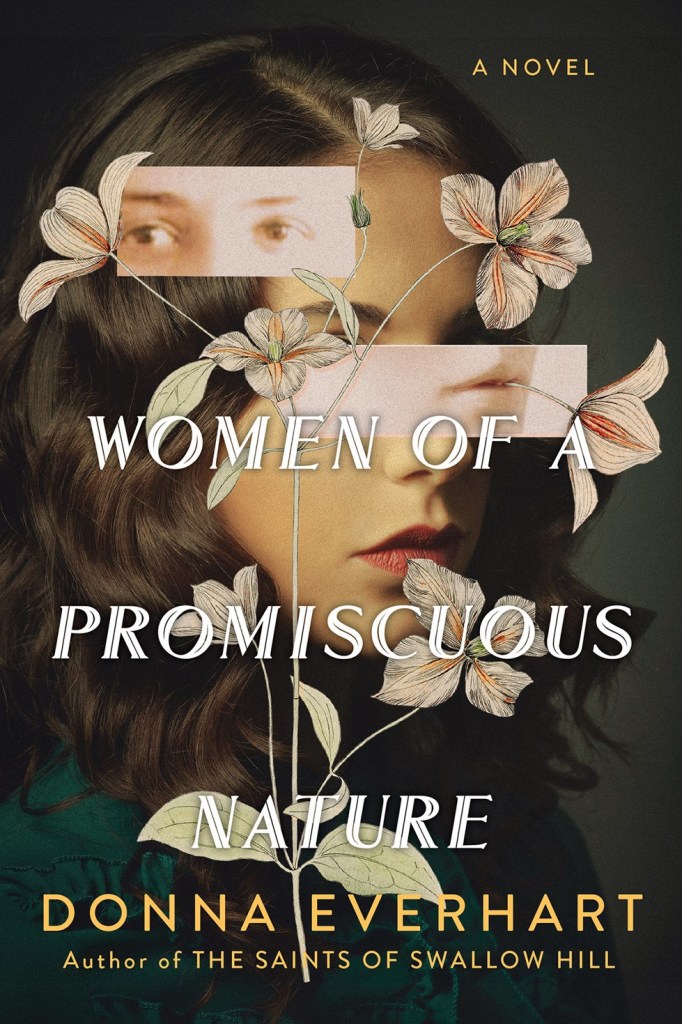
Women of a Promiscuous Nature
By Donna Everhart
Kensington Publishing Corp.
Published January 27, 2026

 Southern Review of Books