
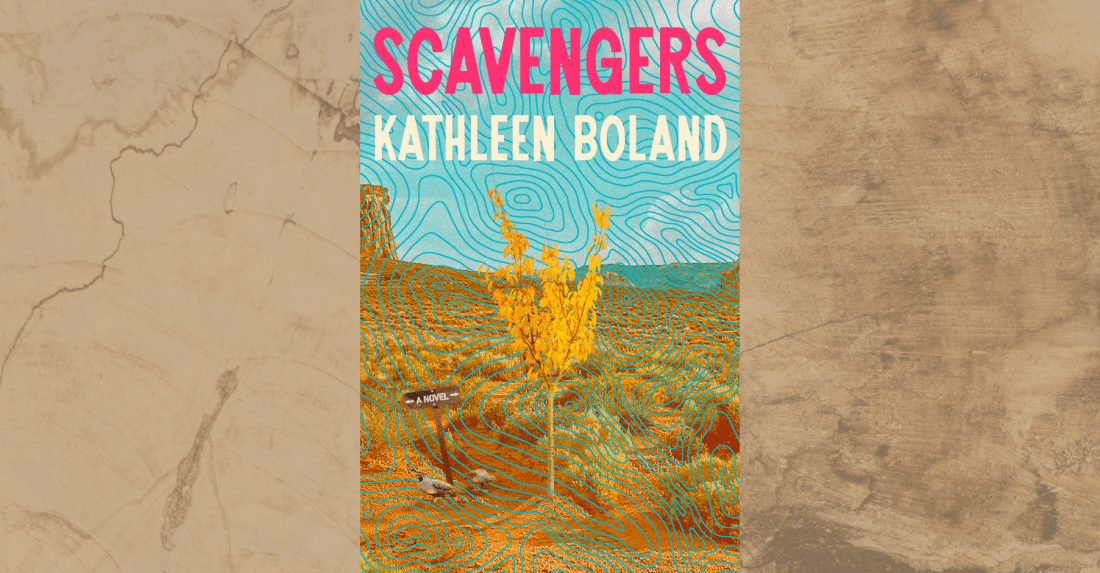
Kathleen Boland’s debut novel, Scavengers, explores the nature of uncertainty for those desperate for stability. The story follows Bea, a thirtyish woman abruptly fired from her role as a junior weather analyst in New York’s commodities trading sector. After losing her job, Bea flies to Salt Lake City to reconnect with her estranged, eccentric mother, Christy, who lives in an apartment Bea has rented for her. Bea soon discovers the true purpose of her mother’s move to Utah: a treasure hunt. Guided by an online forum called The Conversation, Christy has come to believe a million-dollar treasure is buried in the desert. In that same desert, she has also met her enigmatic boyfriend, Bob. With no other choice, Bea joins her mother and Bob on the quest to Mercy, Utah. At first, Bea clings to the hope of “more chances, more choices,” imagining she might return to New York and pretend that “none of this ever happened.” Yet as the narrative unfolds, the novel steadily dismantles this illusion of a clean exit.
The point of view in the novel is a major point of interest, as Boland opens the novel in the second person, centering on Bea’s former career, before shifting to a third-person perspective that alternates between Bea and Christy. The opening passage highlights the pervasive unpredictability and artificiality of human life: “Look, people make shit up all the time. We’re all a bunch of filthy liars. White lies, big lies, anonymous sources, self-checkout, dating profiles, cover letters, orgasms, calories, taxes.” This theme resonates with Bea’s previous job, which involved predicting and analyzing the weather. Episodes of severe weather – derechos, monsoons, floods, and storms – appear throughout the book and dramatize a world where control is illusory and survival is fleeting. Boland writes, “The desert kills by drowning,” overturning expectations in the least likely of places.
Yet amid this uncertainty, Scavengers reveals human resilience: hope, whether realistic or reckless, drives people forward and fosters connections, even in the face of life’s chaos. Following the treasure map created by her mother – which Bea describes as “utterly useless, made by and for idiots” – they become lost in the middle of nowhere. “We could die out here,” Bea says, dehydrated and exhausted, noticing her body weakening and beginning to shake. When all seems lost, Tag, a local climber passing through, comes to their aid and offers Bea a Gatorade, kickstarting a romantic relationship. Tag also introduces Hank, another climber who becomes their companion throughout the journey. Bea and Christy encounter the two men again at a nearby restaurant where they work, and soon the women begin visiting regularly, strengthening their bonds over time.
While portraying friendships and connections that arise in unexpected circumstances, Boland also exposes the darker impulses of human nature, such as violence and aggression. At one point, Bea follows Tag and Hank fishing while her mother joins Bob. As Hank catches koi, Boland writes, “The koi heaved and twitched in the dirt next to Bea.” When Bea expresses discomfort, Hank retorts, “You’re worried about the fucking fish?” The struggling fish mirrors the silencing of women. Christy experiences a similar suppression of her voice when she suggests a better plan to Bob, such as including Tag and Hank as climbers, only to hear him snap, “Do you ever shut up?” This moment becomes a turning point: rather than continue accommodating Bob’s authority, Christy chooses to leave and seek out Bea. Their reunion reframes autonomy in opposition to toxic masculinity and male dominance, not as isolation but as solidarity. Through these portrayals, Boland suggests that women reclaim agency by recognizing and supporting one another, most powerfully within the mother-daughter relationship.
The idea of motherhood, in fact, lies at the novel’s core. “Every mother is a mystery,” Christy tells Bea. Unlike the conventional expectation of mothers as endlessly self-sacrificing caregivers, the novel highlights Christy’s dependence on her daughter, her whimsical choices, and her longing for the company of others. Bea observes that “She seemed small and lost, suddenly a child again” in the desert. By portraying motherhood as human – full of mistakes and in need of support – Boland invites readers to see mothers as complex individuals rather than idealized figures.
Even though the book has much to recommend, a few stylistic choices gave me pause. The biggest challenge I encountered while reading the novel is the frequent shifts between the perspectives of Bea and Christy. Yet these shifts ultimately deepen the reader’s understanding of each character’s experiences and motivations. Boland further experiments with perspective by returning to the second-person narration that opens the novel. While this technique may initially disorient readers, it intensifies the depiction of setting and immerses them directly in the scene, thus creating a cinematic immediacy. For example, near the end, when Bea approaches a giant, mysterious dog on the side of the road, the narration shifts: “You moved closer and it licked your hand, tail thumping against the mud.” This use of second-person narration allows readers not just to comprehend the scene, but to inhabit it, experiencing the physical and emotional resonance of Bea’s encounter.
The plot intrigue and emotional weight of the story carried me through. The novel concludes on a tender note as Bea and Christy jump into a hot spring together in Utah. Christy declares, “Forget Salt Lake,” their joy spilling over into laughter – “more laughing, loud enough for a lizard to skitter out from the edge of the pool and hop off into the scrub.” Bea, who earlier “blamed Christy for most things,” emerges at the novel’s end with a renewed sense of connection, no longer defined by bitterness but by a fragile, hard-won acceptance of her mother and their shared uncertainty.
Though ostensibly centered on a treasure hunt shared between mother and daughter, the novel is ultimately “never about the treasure.” Instead, it explores human resilience, the complexity of relationships, and the nuances of motherhood, driven by hope – even a reckless one – that drives people forward.
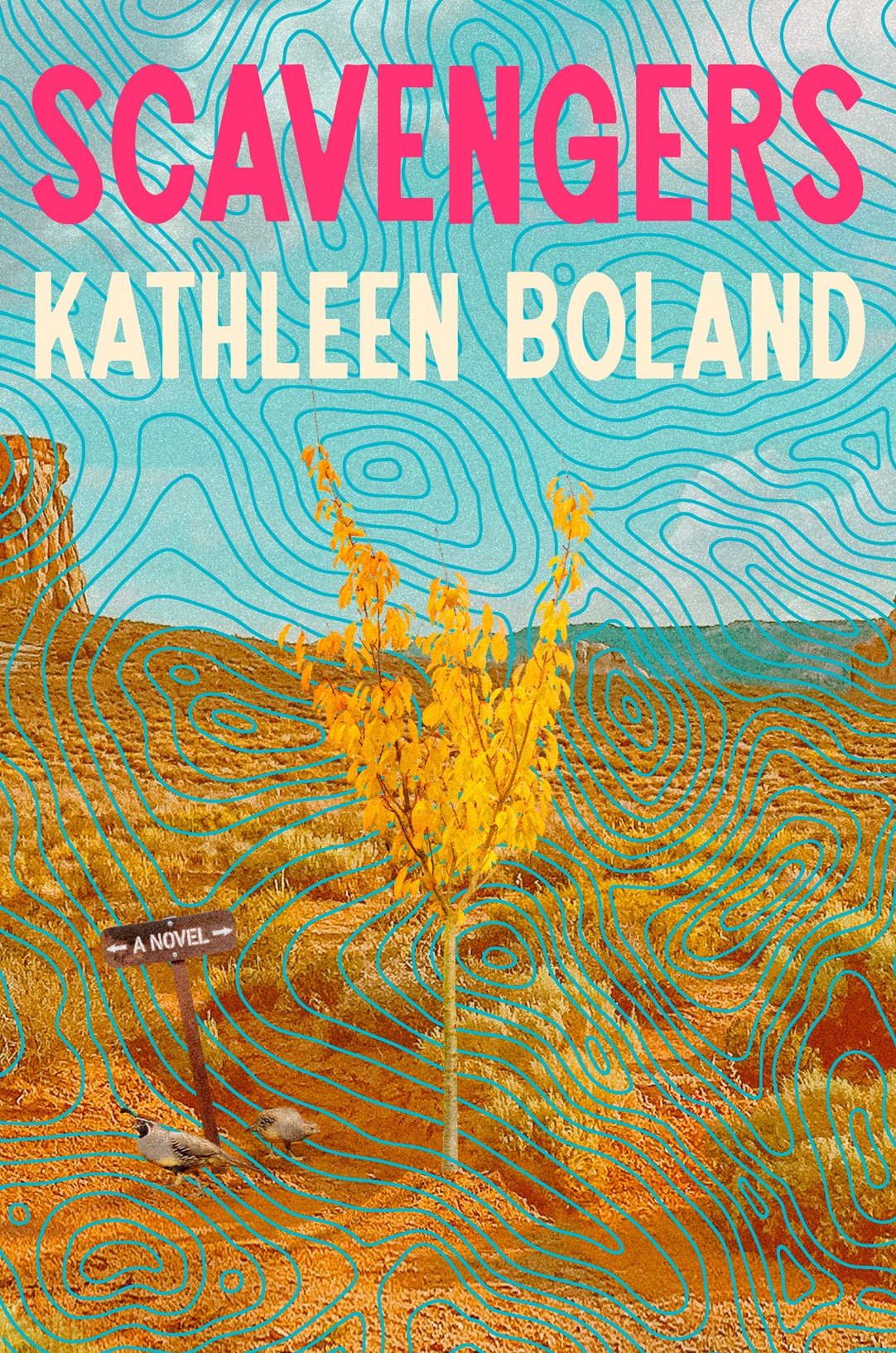
FICTION
Scavengers
By Kathleen Boland
Viking Press
Published January 13, 2026

 Southern Review of Books