
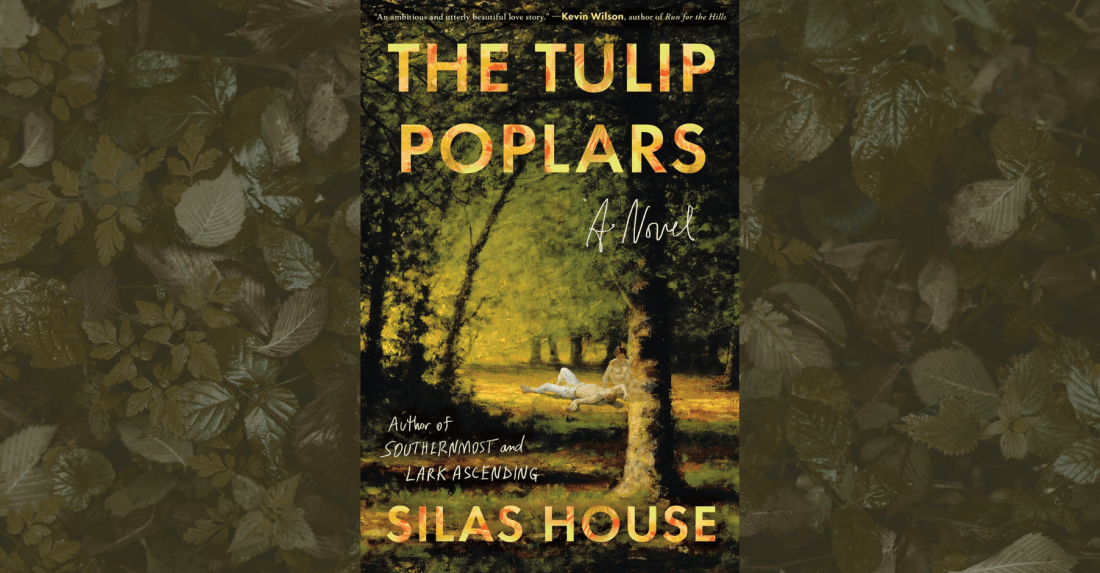
Silas House, the author of such recent novels as Lark Ascending and Southernmost, returns with The Tulip Poplars, an epic Appalachian romance.
As the book opens, House plants us in Bright Star, Kentucky, in 1918. It’s here that we meet the cast of characters — Tom, Amos, Maeve, and Paschal — that guide the rest of the book. Quickly, we witness Tom and Amos fall in love, just as we learn of the love bubbling between Maeve and Paschal. The problem is that both pairings, one gay couple and one interracial couple, are “forbidden” by society.
To make matters more complicated, Amos heads to New York City, and Paschal, to escape from racially motivated attacks, must go to Lexington. The physical separation from Amos and Paschal causes Tom and Maeve to ultimately feel lost. They do, however, find a brand of comfort in one another. Soon, they conceive a child, marry, and begin a life together. The problem is that, yes, they do love one another, but they both also have a deep pining for another.
Like any great romance must, House puts romantic love at the forefront of The Tulip Poplars. The opening beautifully and movingly establishes the bond of Tom and Amos. In one scene, Tom takes the Eucharist, and as he does so, he hears Amos singing. Tom later asks Amos, “How can you say you don’t believe in God and then sing to Him like that, the way you did in the first song?” Amos answers him, offering, “I wasn’t, though.” He then adds, “I was singing those lines to you.” House continues to build romance in tender moments such as this one as the novel progresses.
This scene, too, hints to the larger exploration of religion, which continues throughout the novel. I was moved continually by how House writes of the subject with such depth.
The Tulip Poplars explores the many complexities of love. For example, just within Tom and Maeve’s relationship alone, we see such a layered approach to the subject. We know Tom loves Maeve: “For most of his life she had been his favorite person in the world, and even though he knew his heart now belonged to Amos — even if his body and mind could not — there was no denying that her existence delighted him.” Similarly, we know Maeve loves Tom: “Tom was her dearest friend and had always been.” But as we read, we understand the limits of what their love is — and can be. We see how they both yearn for something more.
One of my favorite aspects of the book is how House doesn’t limit his study on love to people. Tom, for example, has several impactful scenes with his beloved mule, Daisy, and House also so meaningfully looks at the love of place: “Tom stepped back out into the dimming light, and he could feel the trees breathing around him as he walked back to the house. He could feel the vibrations of their roots beneath his feet. They were here, and humming with their aliveness. Tom would do whatever it took to protect them.” In the scenes that turn to the natural world, House most showcases his lyrical and poetic prose.
There is much heartbreak and hardship throughout House’s latest work. Deaths occur. Bad people show out. We witness horrific conversion-therapy scenes. We see how much racism impacts the life of so many in Appalachia. Through it all, The Tulip Poplars reminds us that love is never far away. Amid suffering and mistreatment, there is hope. The book asks us to remember that love has the ability to save us and to heal us.
Yes, Silas House’s The Tulip Poplars is a beautiful reminder of love’s everlasting power.
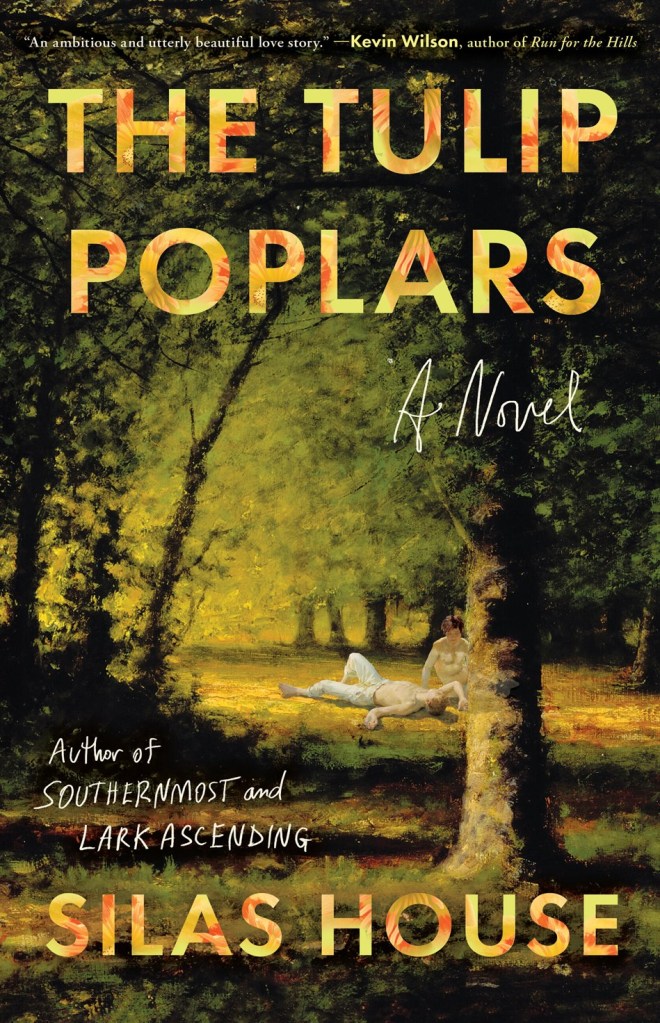
FICTION
The Tulip Poplars
By Silas House
Algonquin
Published October 13, 2026


