
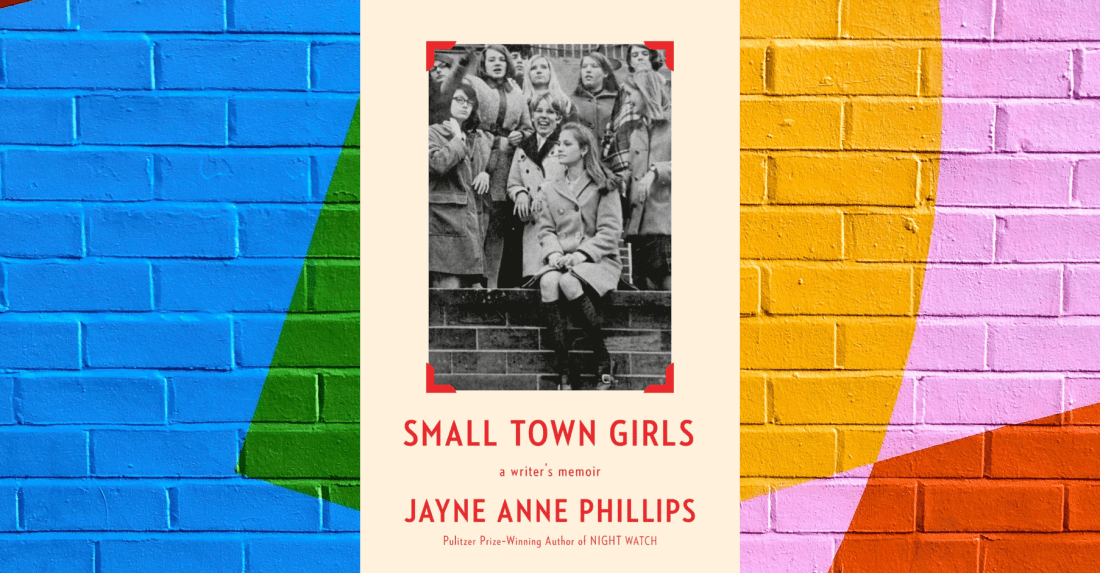
It is hard to read Jayne Anne Phillip’s Small Town Girls: A Writer’s Memoir without recalling your childhood phone number, or even those belonging to the families of your neighborhood playmates. So intimately does Phillips lay down the love and yearning that comes from recalling a home that no longer exists except in the recesses of our minds. Open fields are developed into cookie-cutter neighborhoods; the shadows cast by young families waiting for the school bus each morning dissipate. In “Hometown,” the first of the memoir’s 22 essays, Phillips helps us put words to the weight of these pictures in our minds: “The fields are gone now but the numbers stay in my mind. Towns and cities change; they grow or diminish, but hometowns stay as we left them. Later, they appear, brilliant with sounds and smells, intense, suspended images that slide through time like the slow, saturated frames of a home movie.”
Across the essays, Phillips, the Pulitzer Prize-winning novelist of Night Watch, doesn’t offer the elusive, one-stop-shop antidote to homesickness. What she does provide is a sense of comfort for those grappling with their own grief — present or anxiously anticipated — particularly that experienced through the loss of a parent or child. Reflecting on the nature of “mothering [as] a cradle-grave-proposition” in the essay “Taking Care,” Phillips captures her mother’s smile as she dies from cancer, “a small, sure smile, as though to promise that what was between us would more than last through years of separation: the long slow flicker of time between her death and mine.” Such passages in Small Town Girls are quietly devastating, grounded in Phillips’ refusal to look away from the truths so easily postponed.
At its core, Small Town Girls is as much a love letter to the special confidences shared between mothers and daughters as it is to the writing life and Phillip’s home state of West Virginia, which is written, at times, from a necessarily defensive posture. In her essay on the infamous feud between the Hatfield and McCoy families, she rails against popular culture’s demeaning, ill-informed stereotypes of West Virginians. The memoir moves fluidly, in and out of the natural history and geography of Appalachia captured in “Paradise Lost: West Virginia” and into critical, elegiac appreciations for writers like Stephen Crane and Breece D’J Pancake. Crane — called by Phillips his childhood nickname Stevie — served as a mentor for the young writer, one whose power could transcend time and space. If only Pancake — a West Virginian running on a somewhat parallel track to Phillips before his suicide at age 26 — had lived longer. Phillips allows herself to consider the possibility that he might have lived long enough to accept the writing fellowship from the Provincetown Fine Arts Work Center that was in transit at the time of his death.
Phillips’ own residency in the very cohort Pancake would have joined is just one the many experiences that has shaped an enviable writing career. Like much of her work, Small Town Girls is worth savoring and is deeply satisfying. Though it may be less cohesive than a linear memoir, it nevertheless retains the intimacy that we expect from the book’s title. There is clear thematic unity across many of Phillips’s personal essays, positioning the text as an anthology of insightful reflections and commentary gathered, at long last, under one cover. In the end, Small Town Girls offers a masterclass in the art of the personal essay, one that reminds us of the tools at our disposal to negotiate our confidences, our memories, and our secret lives. After all, as Phillips writes, “writers begin as readers, and words become a means of survival.”
NONFICTION
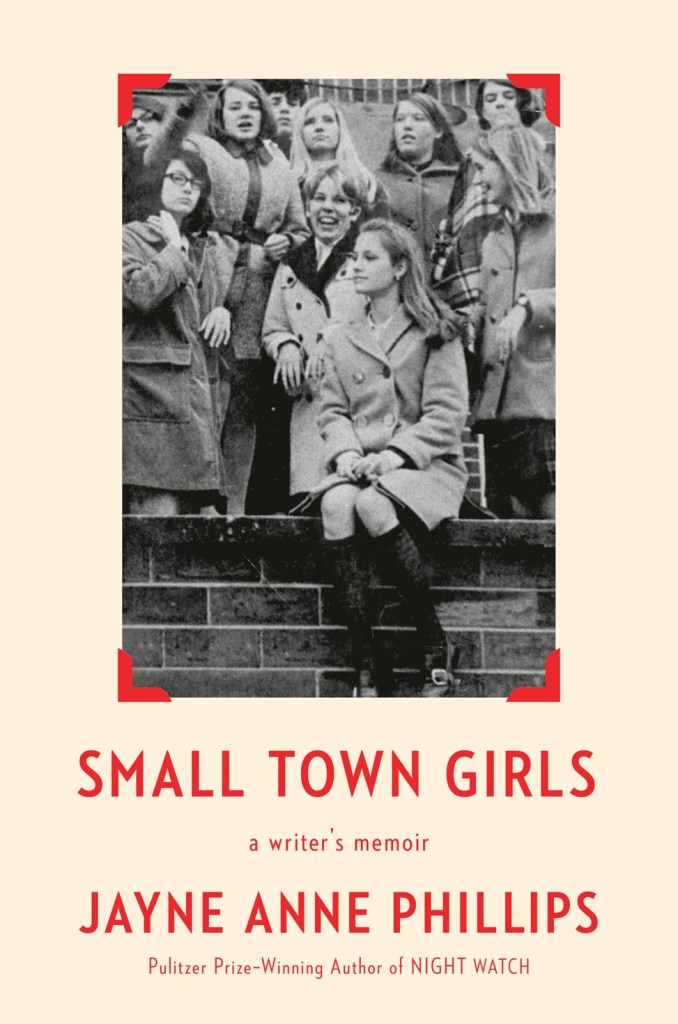
Small Town Girls: A Writer’s Memoir
By Jayne Anne Phillips
Knopf
Published April 21, 2026


