
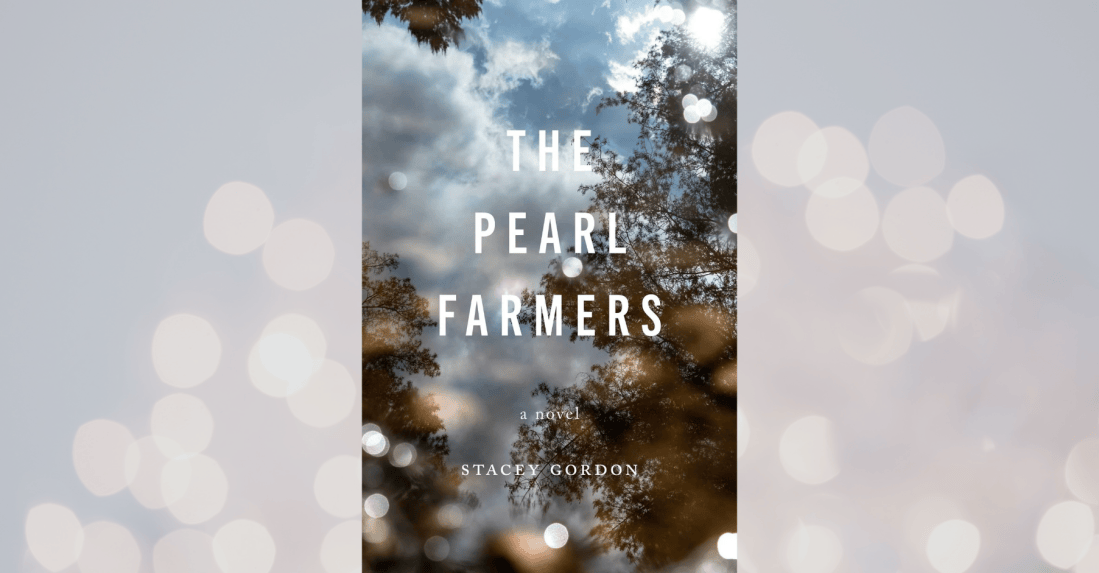
The farmers at the center of Stacey Gordon’s début novel The Pearl Farmers share few similarities with the farmers I know. For starters, they’re not splattered in manure, and for another, they don’t work in fields. Instead of commodity crops and dairy, Gordon’s farmers, the Lockshires, farm freshwater pearls — an industry as dependent on networking as it is on the science of getting mollusks to create a gemstone out of an irritant. But like all farming families, the Lockshires must balance their family and its business with their individual goals and aspirations. And it’s this balancing act that Gordon cultivates for her novel’s main source of tension.
Each of the three Lockshire sisters asserts her independence from Lockshire Industries on a scale from most (the youngest, Penn) to least (the eldest, Helen). Since their father passed away, Helen has run the farm, living part-time in the small town of Ferry’s Landing, where the farm and Iroquois Lake are located, and part-time in Nashville, which she prefers. She bears her sacrifices with resolve, but it’s difficult to tell whether her determination to keep the family business alive is a natural defense against deferring her dreams or how she faces challenging tasks in general. Anna, in the middle, runs cold then hot on the family business and is the only one of the three who lives full-time in Ferry’s Landing. Penn moved away to attend a long list of art schools as soon as she turned 18.
The Pearl Farmers is written in a rotating third-person perspective and uses the recession of 2008 as the impetus for the farm’s economic troubles. Helen tries to keep the business afloat, Anna finds satisfaction in another job reviving their small town, and Penn remains determinedly oblivious in New York, working on an MFA in film. Despite these differences, the three sisters share a sharp defensiveness and a difficulty with romantic relationships. Penn is the most extreme example of the three, running away from any emotion to focus on her goal of making her film. Her affair with her married MFA advisor seems less about passion and more a way to pass the time. As Gordon writes of Penn’s feelings for the advisor, “She hated that he knew anything about her life outside school” — a sentiment she seems to feel about most people in her life.
When Penn’s boyfriend leaves to tend to his own collapsing family and her main actress dies by suicide, Penn hides behind even higher walls until finally giving in to her big sister Helen, who sweeps in and invites her back to Ferry’s Landing. Penn hasn’t talked to her sisters in years, so the reunion is as prickly as these three women are individually. Once together, each must decide whether to care if Lockshire Industries continues to produce pearls. I appreciate how Gordon doesn’t resort to nostalgia here; instead, each sister fumbles toward her own understanding of what the farm means to her and what her role in it should be.
Sometimes, though, the characterizations of the three sisters overlap. When traits are not unique (for example, all three sisters are defensive), it’s difficult to parse one sister’s form of coldness from another’s.
In addition, Gordon grounds Penn’s resentment in her chance discovery, at age six, of the largest American freshwater pearl, and how this discovery became the secret key to the family’s business. As a child, she disliked her role in the pearl farm and therefore carries this dislike into adulthood, but I wasn’t convinced that this experience could explain her ineptness at relationships or her dismissiveness toward her sisters. I thought of Penn as spoiled; she inherits the family house and a 30 percent stake in the farm without having earned any of it. Helen and Anna excuse their sister’s behavior because they are happy about her return. In the farming families I know, splitting shares among non-farming family members causes endless argument.
Despite the lack of distinction between the sisters and the ambiguity surrounding Penn’s resentment, The Pearl Farmers delivers a fascinating portrait of a niche kind of farming. As Gordon writes on her website, she came to pearl farming as a young journalist and uses her years of experience in the field to deftly weave in details of the natural processes and the machinations of the jewelry industry. Helen Lockshire attends jewelry conventions and navigates a close-knit network built over years and generations. Like her sisters, she is an intimate of this world and navigates it with confidence. Though her decision to be a part of this space isn’t entirely her own, she shows us that there isn’t always a perfect path between what we want and who we become, and that an annoyance can lead to something valuable in the end.
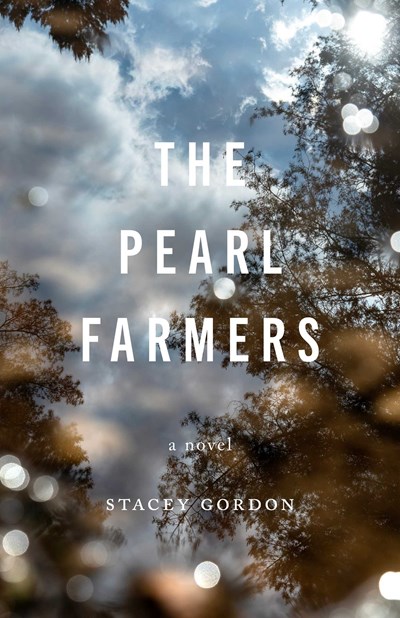
The Pearl Farmers
By Stacey Gordon
She Writes Press
Published November 3, 2026


